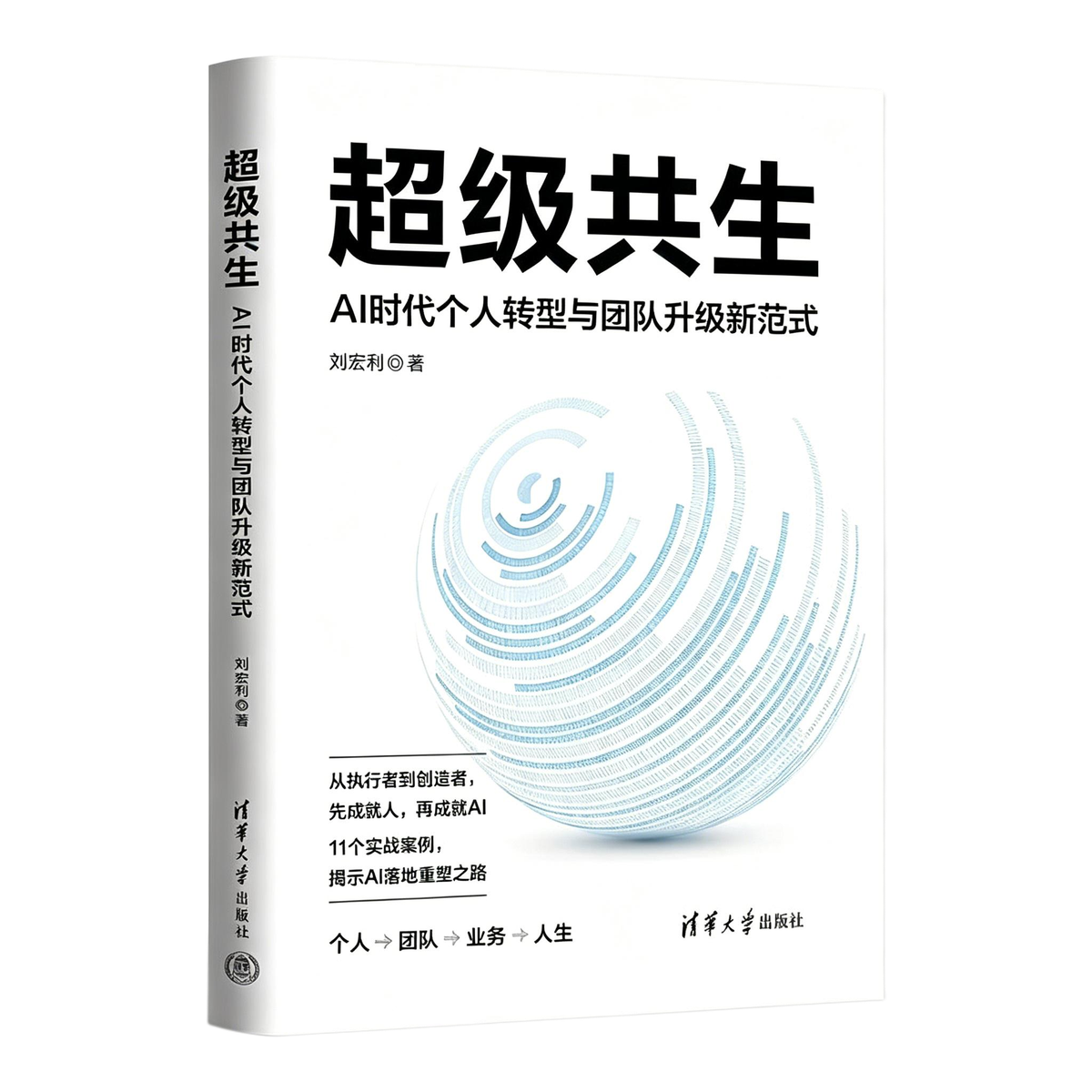
"We are no longer trapped by 'Can I do it?' — we only need to think clearly about 'Do I want to do it?' That is the most subversive breakthrough of AI thinking."
When we talk about AI today, what is the most common scenario? We run into a problem, open AI, type in an instruction, and wait for it to give a precise answer; if it makes a mistake or talks "nonsense," we just close it and grumble, "AI isn't all that useful." Most people's understanding of AI stops right here: they treat it as a more advanced super-search engine, an always-available Q&A tool, assuming its core value is to provide the right answer. But that is precisely the biggest misunderstanding of AI.
On February 5, 2026, in his latest interview with Cisco, Jensen Huang laid out the core proposition of the AI age through an entire conversation: what we should truly focus on was never whether AI can give you the right answer, but the set of AI thinking behind it that completely overturns the old era. The core of this thinking was never the technology itself, but how we should re-examine problems, redefine value, and make choices when AI reduces the cost of intelligence by orders of magnitude, moving the world from 'intelligent scarcity' to 'intelligent abundance.'
01 The Old Mindset All Came from the Era of 'Intelligent Scarcity'
The vast majority of ways we think today, which we take for granted, were born in and perfectly adapted to the era of 'intelligent scarcity.' They are not wrong; it is just that the underlying environment they depended on has been completely changed by AI. For decades, human computing power, time, knowledge, and energy were all scarce resources: Moore's Law doubled performance only every 18 months; mastering a core skill took years of accumulation; completing a large project meant breaking it into tiny modules and advancing step by step; making a decision required repeatedly calculating the cost of trial and error — because of scarcity, we could not afford to be wrong.
Precisely because of this, three deep-rooted habits have been engraved in our thinking, still subtly influencing us to this day:
The habit of linear decomposition:
When facing any problem, our first reaction is always to break it into small pieces and chew on them, even decomposing for the sake of decomposing — diving into details before we have even seen the full picture;
The habit of cost-first thinking:
When making any choice, we first calculate 'Can it be done, and at what cost,' and often abandon what truly has core value simply because the cost of scaling is too high;
The habit of guarding boundaries:
We assume human ability has a clear ceiling, so we first draw a circle around our own capabilities — 'I can only do what I know how to do' — and dare not touch opportunities outside that circle, fearing uncertainty.
Our demand that AI 'must give the right answer' is essentially also a habit of this scarce era. The core of a search engine is retrieving existing, certain information — that was how we acquired knowledge in the age of scarcity; but the core of AI is handling unknown, complex problems, helping us explore possibilities rather than repeating existing answers. Judging a new tool by the standards of an old one is, in essence, facing a new world with old thinking.
02 What Exactly Is the 'AI Thinking' Jensen Huang Describes?
Essentially, it is a way of thinking that completely corresponds to the old mindset yet is adapted to the era of intelligent abundance, requiring a cognitive upgrade.
Core of AI Thinking I: From 'Decomposing Problems' to 'Confronting Problems' — a Holistic Mindset
In the old mindset, our starting point for a problem was 'decomposition,' while the starting point of AI thinking is 'seeing the whole.' Jensen Huang gave a classic example in the interview: faced with a business graph of trillions of nodes and edges, the old approach was to break it into small pieces and process them one by one, because our computing power and energy could not handle the complete problem; but in the era of intelligent abundance, we can first confront the entire complete graph, see the full picture of the problem, and then decide whether and how to decompose it.
This does not deny the value of decomposition, but breaks the habit of 'no thinking without decomposition.' Too often, we decompose and decompose until we forget what the core problem we originally set out to solve was. For annual planning at work, you don't need to break goals down to each day right away — first think clearly: 'If efficiency were no longer the constraint, what is the core result I ultimately want to achieve?' For business optimization, you don't need to assign metrics by department right away — first see the core bottleneck of the entire business chain, then take targeted action. See the whole first, then handle the details — this is the most basic shift of AI thinking.
Core of AI Thinking II: From 'Cost-First' to 'Value-First' — a Growth Mindset
In the old mindset, our starting point for action was 'cost,' while the starting point of AI thinking is 'value.' Jensen Huang repeatedly emphasized in the interview not to obsess over return on investment in the early stages of AI adoption — first find your most core, most value-creating business and apply AI's capabilities to it. Because in the era of intelligent scarcity, the cost of scaling, of trial and error, and of learning were all extremely high, forcing us to calculate cost first; but the intelligent abundance brought by AI has driven these costs down to nearly zero — what once took dozens of people and several months can now be implemented quickly with AI.
Here we must draw a clear line: this is not license to go all in regardless of cost, still less to copy the aggressive playbook of the giants. Huang's aggressiveness is built on NVIDIA's resource endowment and used only for its own core main business. For ordinary people like us, the correct logic is always this: humans set the direction, make value judgments, and run the core closed loop from 0 to 1 and from 1 to 10, while AI handles the scaled amplification from 10 to 100.
We should no longer abandon the transformation path we truly want because 'learning a new skill takes years'; we need not give up new opportunities in core business because 'scaling requires hiring a lot of people.' First judge whether something has core value, then use AI to solve the cost problem — this is the most core implementation logic of AI thinking.
Core of AI Thinking III: From 'Guarding Boundaries' to 'Capability Symbiosis' — a Symbiotic Mindset
In the old mindset, the boundary of our work was 'the boundary of our own ability,' while the boundary of AI thinking is 'the boundary of our own value.' Jensen Huang exposed the most core truth of the AI age in the interview: the core competitiveness of enterprises and individuals was never coding ability or software ability, but your industry expertise, your judgment of core problems, and your understanding of user needs. In the era of intelligent scarcity, our core value was often trapped by skill gaps: no matter how good your business idea, you couldn't execute it without coding; no matter how deep your industry insight, you couldn't persuade others without data analysis.
But the arrival of AI has completely broken this barrier. It did not come to replace you, but to form a capability symbiosis with you. You don't have to demand that you be omnipotent, nor that AI be flawless. You only need to hold onto your core value — set direction, make judgments, control the pace — while AI fills your knowledge blind spots, skill gaps, and execution efficiency. As Huang said, for the first time in human history, we can use our own language to tell the computer our needs directly, and it will help us complete the specific execution.
We are no longer trapped by 'Can I do it?' — we only need to think clearly about 'Do I want to do it?' That is the most subversive breakthrough of AI thinking.
03 The Best Way to Predict the Future Is to Create It.
The core of creating the future was never how many advanced tools you hold, but whether you have a way of thinking that matches this era.
AI has given us unprecedented possibilities: it compresses what once took a year into an hour; brings the capabilities that took years to build within our reach; and places resources that once belonged only to giants in front of every ordinary person. But the ones who can catch this possibility are always those who first complete the turn in cognition.
We need not envy the giants' infinite resources, nor anxiously worry that we can't keep up with AI's iteration speed, still less deny the changes of the whole era because of AI's imperfections. All we need to do is let go of the inertia of old thinking and, with an eye of abundance, re-examine problems and define our own value. After all, what creates the future was never the tool, but the person who wields it well.