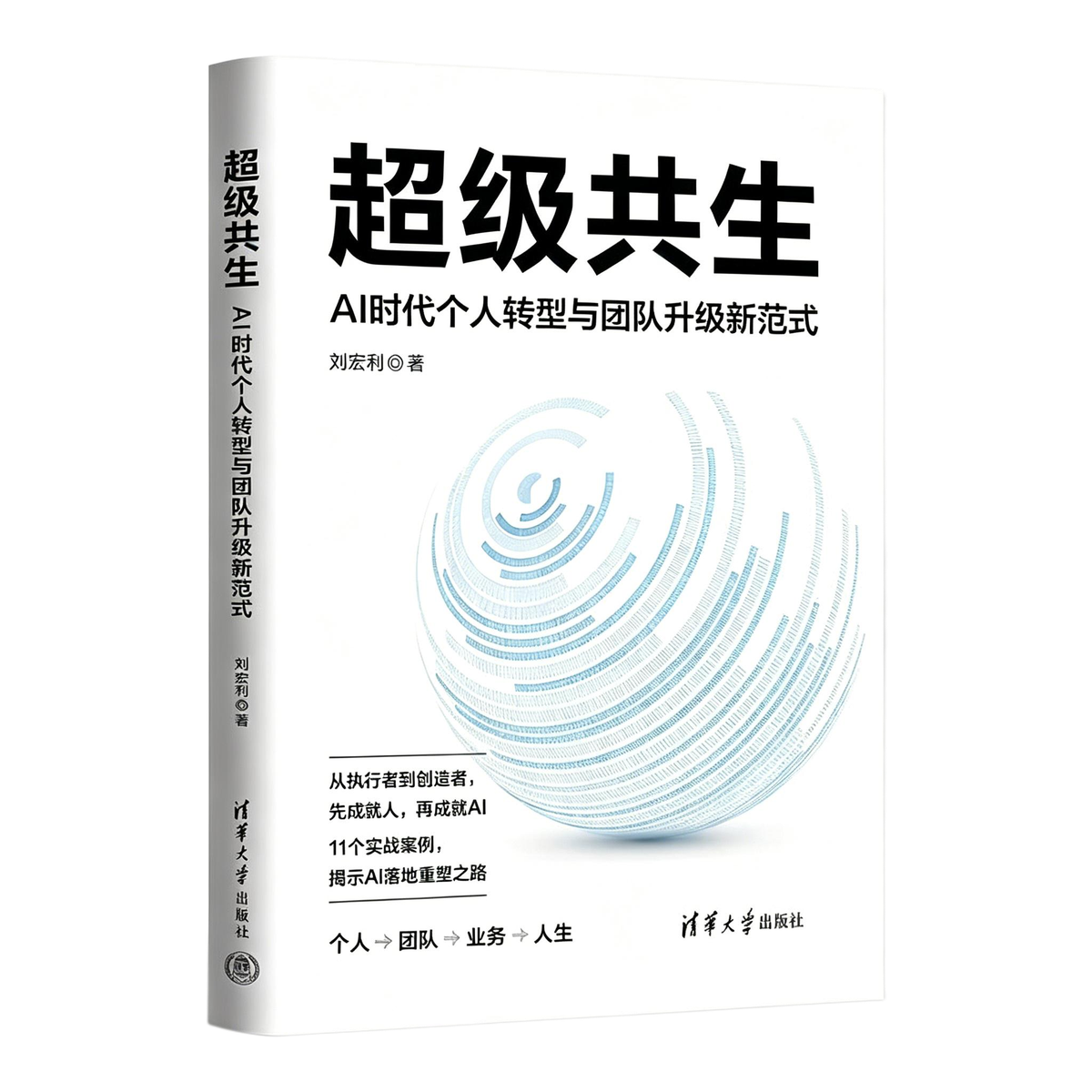
“The core competitiveness of an OPC is the solution ability rooted in a niche professional field!”
If you are reading this and considering joining the OPC trend, try asking yourself a few questions — they have no standard answers, but can help you judge more clearly whether to enter the OPC space and where to find your footing:
In 2026, with AI technology deeply deployed and startup policies supporting it everywhere, OPC became a hot topic in entrepreneurship; the possibility of “one person running an OPC and levering team-level value” opened many people's eyes to new opportunities in solo entrepreneurship. Yet while attention is high, one also finds no few misconceptions about OPC in the industry: some equate a one-person company with an OPC, some conflate the super-individual with the OPC, and some feel that merely knowing how to use AI tools is enough to do an OPC well.
These misconceptions easily lead many, once they enter, into homogenized involution, eventually reducing the OPC to a form that has only a one-person-company shell but lacks core business value. A true OPC is “AI deeply empowering + a solo commercial entity in a niche professional field”; without AI's efficiency boost, a lone individual can hardly sustain professional business services; without niche-professional competitiveness, even the most advanced AI tools are shots in the dark. This is also the most core distinction between OPC and the traditional one-person company or super-individual.
01 Three Common Misconceptions About OPC
In talking with entrepreneurs interested in OPC, I find many understandings of it easily stuck at the level of “form” and “tools,” neglecting the core business logic. These seemingly common perceptions actually deviate from OPC's essence and may become sources of trial-and-error down the entrepreneurial road.
Misconception 1: Conflating OPC with a One-Person Company, believing “one person + AI tools” is already doing an OPC
This is the most common misconception. The two look alike as “one-person operation” forms but are essentially different: a one-person company is an organizational form at the business-registration level, whereas an OPC is a solo commercial entity with professional business-service capability, and AI's deep empowerment is the most critical connection point between them.
Before AI was deeply deployed, operators of one-person companies were often limited by personal energy, efficiency, and capability boundaries, able only to take on basic, singular business services and hardly able to complete systematic professional work like research, analysis, planning, and delivery — after all, one person's ability can hardly cover a team's scope of work.
The arrival of AI, however, can exactly take on the standardized, repetitive, process-based parts of business services, letting a lone individual focus core energy on core work like professional judgment and custom planning, thus making team-level professional service possible. It is fair to say that AI's deep empowerment is the core support letting OPC break the capability boundary of the traditional one-person company; without this empowerment, a one-person company can ultimately hardly become a true OPC.
Misconception 2: Conflating OPC with the Super-Individual, Mistakenly Equating Traffic-IP Logic with OPC Logic
The super-individual is a product of the traffic era, while OPC is a new form of the AI age. Though both are entrepreneurship forms centered on the individual, their core logics differ sharply and should not be lumped together. The super-individual's core competitiveness comes more from a personal IP's traffic influence and fan trust; its business value is also leveraged largely around traffic. Even without deep cultivation of a niche professional field, as long as there is stable traffic and a fan base, commercial monetization can be achieved, and AI-tool empowerment is not necessarily required.
An OPC's core competitiveness, by contrast, is rooted in solution ability within a niche professional field; AI tools are a means to raise efficiency and amplify that ability, while a traffic IP is only a nice-to-have bonus, not a must. An excellent OPC, even without a high-exposure personal IP, can still, by virtue of professional solution ability, gain a firm footing in its niche and accumulate clients. Simply put, a super-individual may lack AI and deep professional cultivation, but for an OPC, AI deep empowerment and niche-professional ability are both indispensable core elements.
Misconception 3: Conflating OPC's Core Competitiveness, Believing That Knowing How to Use AI Is Enough to Do an OPC Well
AI is an important part of an OPC, but treating the tool as the core competitiveness easily slides into involution in a stock market. Today's inclusive availability of AI tools means basic tool application is no longer a scarce ability: you can use AI for compliance reports, video editing, and data organizing, and so can others quickly; you can double your work efficiency with AI, and others can achieve similar effects with comparable tools.
As the market shifts from incremental to stock competition, if everyone only competes on AI-tool efficiency and price, the eventual result is often rising efficiency but thinning profits, with clients' attention limited to price rather than the professional value of service. For an OPC, AI was, is, and always will be only an “amplifier,” not the core. OPC's true core competitiveness is the individual's deep ability in a niche professional field, plus the ability to use AI to amplify that ability and create unique value for clients. Without professional ability as the core, however powerful the AI tool, it is merely an efficiency device spinning empty.
02 The Core of OPC: AI Deep Empowerment + a Solo Commercial Entity in a Niche Professional Field
Setting aside all misconceptions and returning to essence, OPC can be defined as: a radically streamlined commercial entity centered on a single individual, which — relying on solution ability in a niche professional field and combined with AI tools' deep empowerment — breaks the individual's capability boundary, achieves traditional team-level professional service ability, and ultimately creates business value for clients.
In this definition, a niche professional field, AI deep empowerment, and the solo commercial entity are three mutually supporting, indispensable core elements; and “no AI means it is not an OPC, no niche professionalism means only an empty shell” is also the key to understanding this essence.
1. Why Is AI Deep Empowerment an Essential Element of OPC?
Breaking the individual boundary, making one person's undertaking of team-level service possible. AI's value to OPC goes far beyond “simple efficiency gains”; it builds a “digital capability base” for the lone individual, letting one-person operation also achieve the systematization of professional services. Traditional solo entrepreneurship mostly completes “point tasks” — doing copywriting alone, consulting alone, delivery alone — yet can hardly string together a complete professional service flow; AI, however, can take on all standardized steps in the flow: using AI for industry research and data organizing, using AI to generate basic plans and optimize formatting, using AI for basic client outreach and service-progress follow-up.
The lone individual can then focus all core energy on the professional judgment, custom planning, and core problem-solving that AI cannot replace — and this is the underlying logic of “one person levering team-level value,” as well as the core hallmark distinguishing OPC from all traditional solo-entrepreneurship forms.
2. Why Is Niche-Proprofessional Ability the Core of OPC?
Only by rooting in a vertical field can one form an irreplaceable business competitiveness. The core carrier of OPC is the person, and a single person's professional ability, energy, and resources are after all limited; to gain a foothold in the market, one must abandon the “cast a wide net” mindset and instead root in a vertical niche professional field, deepening and mastering the ability.
Here “niche professionalism” is not vague industry awareness but the solution ability to solve a specific core pain point of a certain client type: not “doing finance-tax services” but “doing finance-tax compliance and tax-incentive planning for small and medium cross-border e-commerce”; not “doing offline-store digitalization” but “doing refined membership operations and revenue growth for community small eateries”; not “doing compliance consulting” but “doing GDPR data compliance and risk avoidance for cross-border cosmetics.”
In an era where AI tools are inclusive, basic professional services are easily imitated and replaced; but deep solution ability in a niche field requires long-term professional accumulation and industry insight — something AI cannot replace and other entrepreneurs cannot quickly copy. This ability is the core that lets OPC avoid homogenized involution and gain a firm footing in its niche; without this core, OPC ultimately remains only a form with a one-person-company shell.
3. Why Is the Solo Commercial Entity the Optimal Form of OPC?
Ultimate streamlining, suiting the current entrepreneurial environment. The solo commercial entity is OPC's external organizational form, with “ultimate streamlining” at its core — no traditional team's management cost, communication cost, or labor cost. This lightness lowers OPC's trial-and-error cost, makes direction adjustment more flexible, and better fits today's startup environment.
But this “lightness” is not “lightweight ability” but “lightweight organization”: through AI's deep empowerment, the light organizational form complements professional, systematized service ability. Simply put, OPC is “light organization, heavy ability” — behind one person's operation lies an AI-supported “digital collaboration system,” ultimately outputting traditional team-level professional service value, which is also its unique business advantage.
03 In the Stock-Competition Era, How to Break Through with OPC?
Our economy has moved from incremental competition into the stock-competition era. In a stock-market competitive environment, the key to doing an OPC well lies neither in how adeptly one uses AI tools nor in how perfectly one shapes the one-person-company form, but in deeply integrating niche-professional ability, AI deep empowerment, and client incremental-value creation, so that every entrepreneurial move revolves around business value.
Step One: First Pinpoint a Vertical Niche Professional Track, Deeply Binding Personal Ability to the Track
To enter the OPC space, there is no need to rush into learning various AI tools; better to start by sorting out your own core abilities and finding a fitting vertical niche professional track. Track choice really only needs to meet two simple criteria: first, match your own core professional ability — a field you truly understand, can execute, and can solve real problems in, rather than a trendy track chosen by following the crowd; second, be vertical and precise enough that you can form a professional edge within it and become, in clients' minds, a “reliable solution provider.”
Competition in a stock market was never a contest of “broad but shallow” but of “narrow but deep.” Going deep and thorough in one niche track to build your own professional moat is far more valuable than dabbling across many tracks — and this is also the foundation for OPC to avoid involution.
Step Two: Make AI the “Amplifier” of Professional Ability, Not Its “Replacer”
The correct way to open up AI is to deeply integrate it with personal professional ability, letting professional ability set direction while AI tools do execution. Many people easily fall into a trap when doing an OPC: they pour lots of energy into learning AI tools and instead neglect the polishing of professional ability, eventually becoming “mere AI operators” who have lost their core competitiveness.
The real AI-empowerment logic is actually simple: use professional ability to judge what the client's core pain point is and what approach should solve it; use AI tools to complete executive work like research, organizing, basic planning, and process coordination; use professional ability to control the plan's professionalism and feasibility; use AI tools to optimize service flows and raise delivery efficiency.
Let AI do “what people need not do personally” and let people do “what AI cannot do” — through such cooperation, the individual's professional ability is amplified by AI, truly achieving the effect of “one-person operation, team-level service.”
Step Three: Focus on Creating Clients' Incremental Business Value, Leaping Out of Pure Efficiency Competition
In a stock market, the easiest dead end to fall into is a zero-sum game around “efficiency”: use AI to raise efficiency, then use low prices to attract clients, eventually sliding into a price-war involution. The key to breaking out is to leap beyond pure efficiency competition and, with niche-professional ability plus AI empowerment, create for clients an incremental business value that is perceptible and quantifiable.
Here “incremental business value” means not merely helping clients do existing things faster and cheaper, but being able to help them earn more money, save more core costs, and avoid more potential risks: for example, an OPC doing cross-border compliance not only efficiently generates compliance reports with AI but also helps clients uncover cross-border tax incentives, saving real tax costs; an OPC doing offline-store operations not only does membership-data statistics with AI but also helps clients design exclusive membership-operations plans, driving repeat purchases from old customers and revenue growth; an OPC doing corporate finance-tax not only completes bookkeeping and tax filing with AI but also helps clients with tax planning, avoiding potential tax risks.
The essence of business is value exchange; only by creating incremental value for clients can you make them recognize the professional value of service rather than care only about price; only thus can stable repeat purchases and word-of-mouth form, letting the OPC achieve sustainable business development — and this is the ultimate foothold of all commercial entities.
If you are reading this and considering joining the OPC trend, try asking yourself a few questions — they have no standard answers, yet can help you judge more clearly whether you are suited to enter the OPC space and how to pinpoint your footing:
Thinking these questions through before launching subsequent entrepreneurial moves may reduce much unnecessary trial-and-error, giving your OPC a clear value direction from the very start, rather than a crowd-following form.
04 OPC's Value Ultimately Hides in Professionalism
OPC's popularity is not because the “solo entrepreneurship” form is so novel, nor because AI tools are so magical, but because this era gives individuals with professional ability a superb chance to leverage business value through a lightweight form. I think we need not over-fixate on the “one-person company” form, nor blindly chase the freshness of AI tools; OPC's core has always been the individual's niche-professional ability, and the ability to use AI to amplify that ability and create value for clients.
This era never lacks entrepreneurial wind vents; what it lacks are entrepreneurs who can settle down to polish professional ability, view tool value rationally, and truly create value for clients. Such entrepreneurs, whether or not they choose the OPC form, can find their footing in the market; and such OPCs, even after the trend passes, will still possess lasting business vitality.